
AI mentions tracking
AI mentions tracking: making AI visibility visible.
The days when rankings were all that mattered are over. What counts now is also whether and how AI systems name your brand. Unlike Google, this visibility is hard to pin down: answers vary, and sources are not always linked. AI mentions tracking creates transparency and records when, where and in what context your brand is mentioned in ChatGPT, Perplexity, Gemini and Copilot.
A fixed prompt set
AI mentions tracking asks the same questions of the same systems every time. Only then are two measurements comparable.
Several systems in parallel
ChatGPT, Perplexity, Gemini and Copilot answer differently, so AI mentions tracking measures each separately.
Mentions without links included
In AI mentions tracking the attribution gap is measured rather than ignored.
Fundamentals
What is AI mentions tracking?
AI mentions tracking is part of the wider GEO optimization and answers a single question: does your brand appear in an AI system's answer? Not whether people talk about it, not in what tone, but whether it appears in the generated answer.
AI mentions tracking, also called AI citation monitoring, is the systematic recording of how often and in what context a brand appears in the answers given by AI systems. Because many systems link their sources only partially or not at all, and because the same question is answered differently depending on timing and context, manual monitoring is barely possible. Specialised technology therefore puts a fixed set of questions to several systems repeatedly and evaluates the answers automatically: is the brand named, in what position, in what context, and which sources does the system draw on. Individual answers become comparable metrics.
Some mentions appear as a visible citation with a link, others do not. That gap is called the attribution gap: the AI uses a brand's information without naming the source. Anyone counting links alone underestimates their actual presence, so the tracking records both cases.
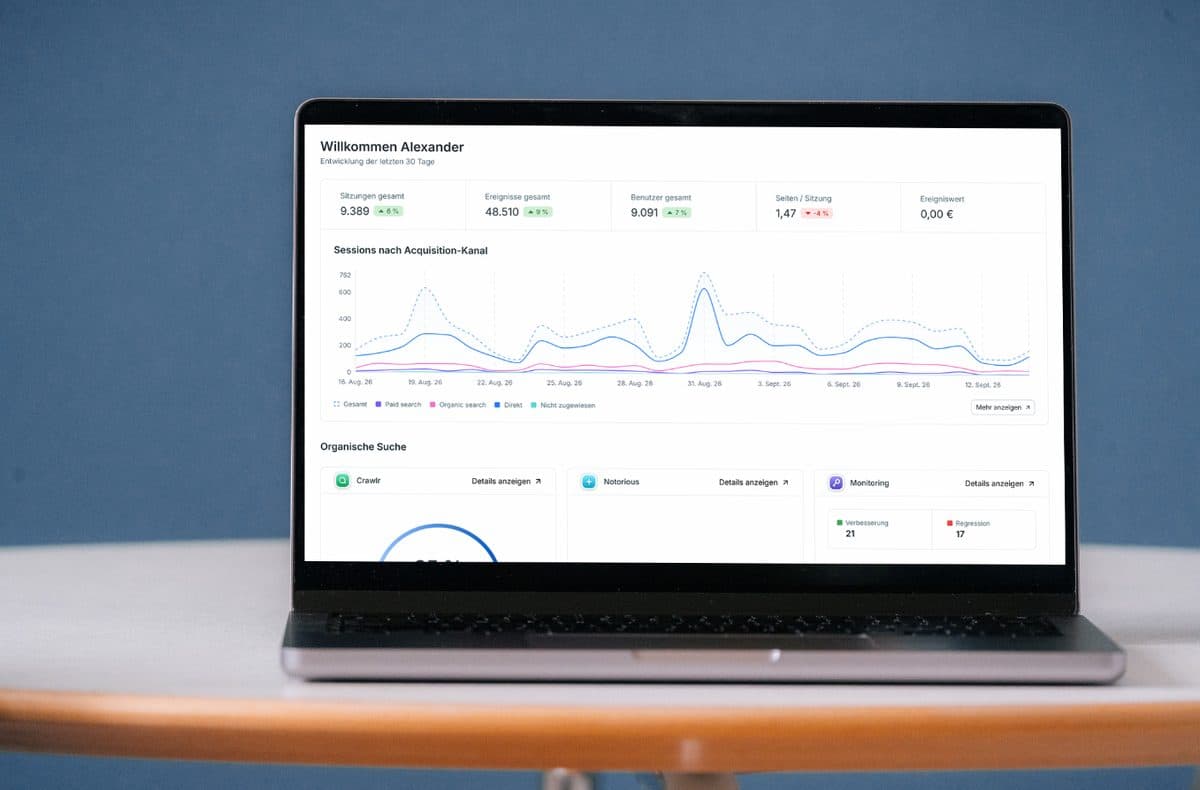
Semtrix uses its own GEO and LLM tracking tool as well as the LLM Ranking from the Eskimoz app, and brings the data together in a central dashboard, clearly structured and regularly updated. Start with a free analysis and find out how often your brand appears in AI answers today.
AI mentions tracking measures whether a brand is named in the answers of AI systems such as ChatGPT, Perplexity, Gemini and Copilot. Measurement runs on a fixed prompt set, and both linked and unlinked mentions are recorded.
Key figures
AI mentions tracking backed by experience.
GEO and SEO
GEO and SEO: two disciplines that complement each other.
AI visibility is a discipline of its own, yet it is connected to classic SEO: content that is well set up for search engine optimization is also easier for AI systems to capture. Monitoring data from AI mentions tracking helps develop both disciplines deliberately. That is why AI mentions tracking sits alongside classic rank tracking rather than replacing it.
The metrics, however, differ fundamentally. SEO measures positions and clicks, and a position is unambiguous and can be looked up. AI answers are not: the same question may produce a mention today and none tomorrow. AI mentions tracking therefore measures not a state but a frequency across many queries. Forcing both into one table compares things that cannot be compared.
Classic SEO monitoring
AI mentions tracking

The most common surprise in a first report is not that a brand is named too rarely. It is that it is named for the wrong questions. Someone appears in twenty advice answers and in not a single purchase intent. You only see that if you fix the questions beforehand.
Why Semtrix
Why AI mentions tracking from Semtrix?
Semtrix built GEO expertise early and runs its own GEO and LLM tracking tool. As part of the Eskimoz group, named Best Large Integrated Search Agency at the European Search Awards 2026, Semtrix combines technical monitoring with strategic interpretation. The jury explicitly cited the group's early GEO focus, which is exactly the work this tracking comes from.
A dashboard on its own changes nothing. What matters is who reads the numbers and what follows from them. At Semtrix every project sits with a named contact who defines the prompt set with you and interprets the results in your status meetings. You can read more about the team about us, and see examples of our work in the references. Strategy and ownership sit with the GEO agency.
Who it is for
Who is AI mentions tracking right for?
Tracking pays off for companies that want to be visible in AI systems and make their progress measurable, particularly in advice-heavy and highly competitive markets. Anyone already running GEO measures also needs monitoring to prove effect and progress.
Brands with GEO measures under way
Without a baseline there is no way to prove progress. AI mentions tracking documents the position before the first measure and then measures against the same questions.
Advice-heavy markets
Where people research before buying, that research increasingly starts in an AI system. A brand that is not named there never even reaches the shortlist.
Companies with strong rankings and weak AI presence
A frequent finding: top positions at Google, no mention in ChatGPT. AI mentions tracking makes the gap visible before it shows up in revenue.
Brands operating in several languages
AI systems answer with different sources in each language. A German measurement says nothing about the French market, so AI mentions tracking runs per market.
Where the lines are drawn
AI mentions, brand mentions and brand sentiment: who measures what.
Three pages, three questions, no overlap. AI mentions tracking measures whether your brand appears in the AI answer. Building brand mentions makes sure enough is said about you across the open web for AI systems to know you at all. Brand sentiment assesses the tone in which that happens. This page covers only measurement inside the generated answer. If you still have to build presence, start with brand mentions. If you are already named but portrayed unfavourably, start with sentiment.
Building blocks
What AI mentions tracking covers.
Monitoring is part of the wider GEO optimization, while strategy and ownership sit with the GEO agency. Related areas are entity SEO and LLMO.
Mention and citation capture
Systematic recording of mentions with and without links, including the attribution gap that pure link counts overlook.
GEO dashboard
Central, visual preparation of all data, broken out by system, by topic and by market.
Trend and topic analysis
How visibility develops over time and across topic clusters, so it becomes clear where presence is growing and where it is being lost.
Top engines
An evaluation of which AI systems your brand appears in most often, and where improvement carries the greatest leverage.
Source and competitor analysis
Which pages are cited in your place and which competitors appear in the same answers. The basis for work on brand mentions.
Recommended actions
Recommendations on where to sharpen content and which opportunities to take first, prioritised by impact and effort.
Editorial responsibility held by Florian, Manager Search, team lead search consulting. Last updated September 2026.
Measured. Interpreted. Traceable.
AI mentions tracking delivers AI visibility as a number that still means the same thing next month.


Process
How we work together.
AI mentions tracking in four steps, from the first prompt set to the resulting measure. The first step decides the quality of every measurement that follows.
Setup
Definition of the relevant brands, topics and AI systems, plus the fixed prompt set of category, comparison and purchase questions.
Capture
Automated tracking of mentions and citations, repeated and separated by system, so that fluctuation remains recognisable as fluctuation.
Evaluation
Preparation in the GEO dashboard with trends, topics, sources and competitors, plus interpretation in the status meeting.
Recommendations
Recommendations for content, entities and mentions, prioritised by what the measurement actually shows.
Systems
Which AI systems we measure.
Every system draws on different sources and displays them with different transparency. AI mentions tracking therefore runs per system rather than producing an average.
ChatGPT: mentions often without a visible source
ChatGPT answers many questions from model knowledge and only turns to web search when needed. For measurement that means:
- Mentions often appear without a linked source, so the attribution gap is widest here
- Answers vary with the phrasing of the question, so each question is asked repeatedly
- Brand awareness across the open web weighs more than your own website
- What is measured is the mention itself, not a reference
Because the model summarises information rather than citing documents. That is the attribution gap. For visibility what counts is still whether your brand name appears in the answer, and that is exactly what is recorded.
Does the answer change if I ask the same question twice?Yes, often. A single sample is therefore worthless. Only repeating the same question over a period produces a reliable frequency.
Perplexity: transparent sources, rapid change
Perplexity is search-based and shows its sources openly. That makes evaluation more precise but also more volatile:
- Every answer names sources, so mentions and citations can be separated cleanly
- Freshness weighs heavily, and new content can move into the answer quickly
- Competitors are directly visible because they appear as sources
- Well suited to checking the effect of individual pieces of content in the short term
Yes. Because the system picks up current content quickly, effects show here earlier than in systems that answer more from model knowledge. As a sole benchmark it is still not enough.
Does a source reference without a mention in the text count?It is recorded separately. A reference below the answer is valuable; a mention inside the answer text is more valuable. The dashboard reports both rather than merging them.
Gemini: close to Google search
Gemini is Google's language model and also sits behind the AI Overviews in search. For measurement that means:
- Results correlate more strongly with classic Google visibility than in other systems
- Structured data and clean technical foundations have a particularly direct effect
- The distinction from the search interface matters, which is covered by SGE and AI Overview optimization
- Language and market noticeably influence which sources are chosen
No. Gemini as an assistant and the AI Overviews in Google search are two interfaces with different source selection. Visibility in the search interface is covered on the page about SGE and AI Overviews.
Does good classic SEO help most here?It demonstrably helps, but it is not enough. Even at Google, what matters is whether your brand is recognisable as a distinct entity. That is the work of entity SEO.
Copilot: visibility in a work context
Copilot is embedded in Microsoft products and is often used at work. That makes it relevant for B2B brands:
- Questions tend to come from research and selection processes rather than leisure topics
- Bing visibility carries more weight than in other systems
- Specialist and industry sources have above-average influence
- For B2B brands, separate measurement is especially worthwhile
Usually less so than in B2B. If your audience mostly researches privately, the leverage sits with ChatGPT and Perplexity. Which systems are measured is decided together during setup.
How many systems should be measured as a minimum?At least two, ideally three. A single system gives a distorted picture, because model changes and source preferences take effect in different ways.
Your benefits
Your benefits with Semtrix.
AI mentions tracking delivers measurable AI visibility instead of guesswork, with a named contact who puts the numbers in context.
Free analysis
Have your AI visibility checked for free.
AI mentions tracking by Semtrix shows you how often and in what context your brand appears in AI answers, which systems it is missing from and which competitors are named in its place. From that we derive concrete measures.
Team
Here for you personally.
Behind AI mentions tracking stands a team that sets the questions, reads the results and turns them into measures.




Semtrix by Eskimoz
What the Eskimoz group means for your monitoring.
Semtrix is a global search agency: you are found where people search, in classic search and in AI answers alike. Since 2024 Semtrix has been part of the European Eskimoz group. Nothing changes about your support; your project stays with a fixed team in Düsseldorf or Essen.
From the group comes the LLM Ranking in the Eskimoz app, which tracks mentions in ChatGPT, Perplexity and the AI Overviews systematically. Because the group works across 5 countries and 10 languages, measurement can also run market by market. At the European Search Awards 2026 the group was named Best Large Integrated Search Agency, and the jury explicitly cited its early GEO focus.
FAQ
Frequently asked questions about AI mentions tracking.
The questions we are asked most often about AI mentions tracking in a first conversation.
How do I find out whether my brand is mentioned in ChatGPT?
Through specialised monitoring. Since AI systems often do not display sources in full, AI mentions tracking automatically records when and how your content is used.
What is the attribution gap?
It describes the fact that AI systems use a brand's content without always naming or linking it as a source. Good tracking records these unlinked mentions as well.
Which AI systems are covered?
Among others ChatGPT, Perplexity, Gemini and Copilot. Search-based systems show sources more transparently, while others use content without linking. The tracking covers both cases.
How does AI mentions tracking differ from brand mentions?
AI mentions tracking measures mentions inside an AI system's answer. Brand mentions are mentions across the open web, for example in specialist media or forums. They are the precondition for AI systems knowing a brand at all.
So what does brand sentiment measure?
Not whether but how people speak about your brand. Brand sentiment assesses the tone of mentions, both in the sources and in the AI answers themselves.
How often should measurement take place?
At least monthly, and more often in fast-moving markets. What matters is asking the same questions every time. A changing prompt set makes two measurements incomparable.
Can I do the tracking myself?
You can take individual samples at any time. It only becomes reliable through repetition, several systems, several phrasings and clean documentation. That effort is exactly what the tracking takes off your hands.
What happens when a model is updated?
Mentions can shift, sometimes noticeably. That is why measurement runs in several systems in parallel and the break is documented in the trend rather than read as a drop in performance.
Does the tracking show my competitors too?
Yes. For every question we record which brands and sources are named in your place. That is often the most valuable information, because the concrete measures come from it.
Does AI mentions tracking replace my SEO monitoring?
No. Positions and clicks remain relevant and continue to be measured through Search Console and rank tracking. AI mentions tracking adds a separate layer of measurement.
How long does it take for changes to show?
Search-based systems can react within weeks, systems with strong model knowledge much later. Realistically, first reliable shifts appear over several months.
What does AI mentions tracking cost?
The effort depends on the number of questions, systems and markets. After the free analysis you receive a transparent proposal rather than a flat rate.
Free and without obligation
Let's talk about your AI visibility.
Personal, concrete and without off-the-shelf solutions. In a first conversation we set the prompt set for your AI mentions tracking, meaning the questions your visibility will be measured against from now on.