
SGE and AI Overviews
SGE and AI Overviews: visible in Google's AI answers.
Google answers more and more queries directly with AI-generated modules, the AI Overviews, which grew out of the Search Generative Experience (SGE). The AI Overviews sit right at the top, above the classic results, and change how visibility comes about. Appearing in the AI Overviews as a source means being seen prominently. Semtrix prepares your content specifically for SGE and AI Overviews.
Answer before text
For AI Overviews what counts is content that answers a concrete question in the first paragraph instead of the fifth.
Machine-readable markup
Structured data and clear entities, so Google can classify content for the AI Overviews with confidence.
On the Google surface
This page covers the AI Overviews in Google search, not the assistants alongside it.
Fundamentals
What are SGE and AI Overviews?
Optimising for SGE and AI Overviews is part of GEO as a discipline in its own right, meaning GEO optimization. It concerns one single surface: the AI Overviews inside Google search.
AI Overviews are AI-generated answer modules in Google search that summarise a question directly and point to sources while doing so. They grew out of the Search Generative Experience (SGE), Google's experiment with generative search, and are built on Google's language model Gemini. For companies that means visibility no longer comes from a classic ranking position alone, but also from whether Google uses your content in the AI Overviews. A single AI Overview can cite several sources that are not necessarily in the top positions. Position and citation have therefore become two different things that need observing separately.
In practice, AI Overviews appear above all for information-led and explanation-heavy queries, and less often for clear navigational or transactional intent. The AI Overviews change click behaviour, because part of the answer already sits in search. That makes it all the more important to be visible in them as a cited source and to build brand presence.
Semtrix prepares content for the AI Overviews so that Google classifies it as clearly structured, trustworthy and topically unambiguous, and makes visibility measurable through its own GEO and LLM tracking tool. Start with a free analysis and find out how visible you are in Google's AI answers today.
AI Overviews are the AI-generated answer modules in Google search, grown out of the Search Generative Experience (SGE) and built on Gemini. The AI Overviews summarise a question and point to sources that are not necessarily in the top positions. Optimisation today targets the AI Overviews, not SGE.
Key figures
AI Overviews backed by experience.
GEO and SEO
GEO and SEO: two disciplines that complement each other.
The interplay is clearest at Google: the same query shows classic results and AI answers side by side. A technically and editorially strong website, of the kind search engine optimization creates, is the basis for Google drawing on content for AI Overviews. GEO and SEO work in parallel and as equals.
The overlap is larger here than for any other GEO building block, and that is exactly the trap. Anyone assuming good rankings automatically lead into the AI Overviews will be disappointed: Google regularly cites pages from position six and passes over position one, because a passage there answers the question more directly. Ranking work remains a precondition, but it does not replace preparing content for extraction by the AI Overviews.
Classic ranking
Citation in the AI Overviews

We have pages at position one that never show up in the AI Overviews, and others from position eight that get cited there every day. The difference is usually a single paragraph that answers the question completely and without any preamble.
Why Semtrix
Why choose Semtrix for SGE and AI Overviews?
Semtrix built GEO expertise early and has worked on Google search since 2015, with more than 1,500 projects delivered. For AI Overviews exactly that combination pays off: the technical basis is classic SEO work, the preparation for the AI Overviews is not. Both come from the same team here, without a handover between two suppliers.
As part of the Eskimoz group, named Best Large Integrated Search Agency at the European Search Awards 2026, Semtrix brings experience many are only now developing. The jury explicitly cited the group's early GEO focus. You can read more about the team about us, and see examples of our work in the references. Strategy and ownership sit with the GEO agency, and for Google's model specifically see Gemini SEO.
Who it is for
Who is this optimization right for?
Optimising for AI Overviews pays off for companies whose audience uses Google heavily and whose topics are frequently answered with AI Overviews, particularly for information-led and advice-heavy queries. Optimising early for AI Overviews secures visibility while others still rely exclusively on classic results.
Advice and knowledge sections
Where questions are explained, AI Overviews appear most often. This is exactly where it is decided whether the AI Overviews cite your content or merely summarise it.
Advice-heavy products and services
Long decision paths begin with questions about understanding, and that is exactly where AI Overviews appear. Being a source there means being present in the selection process before comparison even starts.
Websites losing traffic despite stable positions
A typical pattern: positions hold, clicks fall. The AI Overviews are then already answering part of the question before the click.
Brands with strong specialist content
If you already have depth in your existing content, the AI Overviews often need no new text from you but preparation: answer blocks, structure and markup.
Where the lines are drawn
AI Overviews, ChatGPT and Perplexity: where this page ends.
This page covers one surface: the AI Overviews inside Google search. A citation in the AI Overviews is not the same as a mention in ChatGPT, Perplexity or Copilot, nor the same as an answer from the Gemini assistant. Every system draws on its own sources and answers differently. Whether and how often your brand is named in those other systems is measured by AI mentions tracking. Whether Google can identify your brand at all is decided by entity SEO. If you want visibility beyond the Google surface, the right starting point is GEO optimization.
Building blocks
What we deliver for SGE and AI Overviews.
The overarching strategy sits under GEO optimization and with the GEO agency; for Google's model specifically see Gemini SEO.
GEO audit
A review of whether and for which topics your content appears in the AI Overviews, including which sources are cited in your place.
Content preparation
Precise answers to concrete questions, clear structure and evidenced facts, built as passages the AI Overviews can extract rather than continuous prose.
Structured data and entities
Technical markup and unambiguous attribution, deepened in entity SEO and technically secured in technical SEO.
Authority signals
Building the trust Google treats as a quality marker for the AI Overviews: named specialist authors, verifiable sources and mentions built through brand mentions.
Query and intent coverage
Systematic coverage of the follow-up questions Google offers inside the AI Overviews, so your page can answer more than one question.
Monitoring
Recording visibility through AI mentions tracking, separated into AI Overview appearance and actual citation.
Editorial responsibility held by Rebekka, Search Consultant, specialising in SEO and GEO. Last updated September 2026.
Answered. Evidenced. Extractable by AI Overviews.
Content Google can build the AI Overviews from without having to interpret it first.



Process
How we work together.
Visibility in the AI Overviews in four steps, from the audit to ongoing measurement. Most of the work sits in preparing existing content, not in writing new content.
Diagnosis
A GEO audit of visibility in the AI Overviews, including a survey of which of your topics trigger a module at all.
Decision
Strategy and roadmap with clear priorities, starting from the topics with high module frequency and existing substance of your own.
Delivery
Content, entity and structure optimization for the AI Overviews, including answer blocks, markup and coverage of follow-up questions.
Monitoring
Ongoing measurement through the GEO and LLM tracking tool, evaluating AI Overview appearance, citation and click development separately.
Content for AI Overviews
Which content gets cited in the AI Overviews.
Four formats are extracted by the AI Overviews disproportionately often. All four have one thing in common: they deliver a self-contained statement a system can take over without interpreting it.
Definition paragraphs
A clearly delimited paragraph that explains a term completely is the format the AI Overviews extract most often. The form is what matters:
- 80 to 150 words, one term, no digression
- The term appears in the first sentence, not in the third
- No preamble and no reference to a later section
- Placed directly under the heading that asks the question
For the AI Overviews, 80 to 150 words works well. Shorter reads as incomplete; longer forces the system to select and therefore to interpret. Avoiding exactly that is the point of the preparation.
Is it enough to put the definition in the FAQ?No. The FAQ helps in addition, but the load-bearing definition belongs in the body text. The AI Overviews prefer to extract from the main content, not from an appended question block.
Numbered procedures and instructions
Where a question is answered with steps, the AI Overviews often take over the sequence directly. That demands discipline in the structure:
- One step per list item, with an unambiguous verb at the start
- An order that remains understandable without the surrounding text
- No cross-references inside the list
- Prerequisites and outcome named rather than implied
Often yes, sometimes the AI Overviews take only individual points. That is why every point has to stand on its own. A step that refers back to the previous one becomes useless once pulled out of context.
Does every set of instructions need HowTo markup?It does no harm, but for the AI Overviews it decides less than the structure of the text. What matters more is that the steps are cleanly separated and logically ordered in the visible content.
Comparisons and side-by-side views
For selection and trade-off questions, the AI Overviews readily draw on tables and clear side-by-side views. The format works particularly well close to a purchase decision:
- A table with identical criteria for every option
- A clear statement of which option suits which case
- Comprehensible criteria rather than a bare feature list
- Neutrality, because one-sided comparisons are extracted less often
A reasoned recommendation is legitimate; a distorted comparison shows. The AI Overviews prefer sources that make trade-offs explicit. Listing only advantages makes you less likely to be used as neutral evidence.
Are tables technically necessary?Not strictly, but they help. A real table makes the link between criterion and value unambiguous. Comparisons written as prose are summarised incorrectly by the AI Overviews more often.
Figures, sources and recency
In the AI Overviews, evidenced statements are preferred over unevidenced ones, because they lower the risk of a wrong summary. That affects content and markup alike:
- The figure, its reference base and its period in the same sentence
- The source named, even when it is your own survey
- A visible update date and named editorial responsibility
- Regular maintenance, because outdated figures actively do harm
Because recency is a selection criterion for the AI Overviews. For topics that change, systems prefer sources that are visibly maintained. A date without real maintenance does not help, as that shows up when the content is compared.
Do I have to publish my own figures?Not necessarily, but it is the strongest lever for the AI Overviews. Your own surveys are the one source only you can supply. Content like that is cited disproportionately often.
Your benefits
Your benefits with Semtrix.
Visibility in Google's AI Overviews, built on the content you already have.
Free analysis
Have your visibility checked for free.
Semtrix checks how visible your content is in Google's AI Overviews, which topics trigger an AI Overview at all and which sources stand there in your place. From that we derive concrete measures.
Team
Here for you personally.
Behind the work on the AI Overviews stands a team that looks at content for the AI Overviews editorially and technically at the same time.




Semtrix by Eskimoz
What the Eskimoz group means for your Google visibility.
Semtrix is a global search agency: you are found where people search, in classic search and in AI answers alike. Since 2024 Semtrix has been part of the European Eskimoz group. Nothing changes about your support; your project stays with a fixed team in Düsseldorf or Essen.
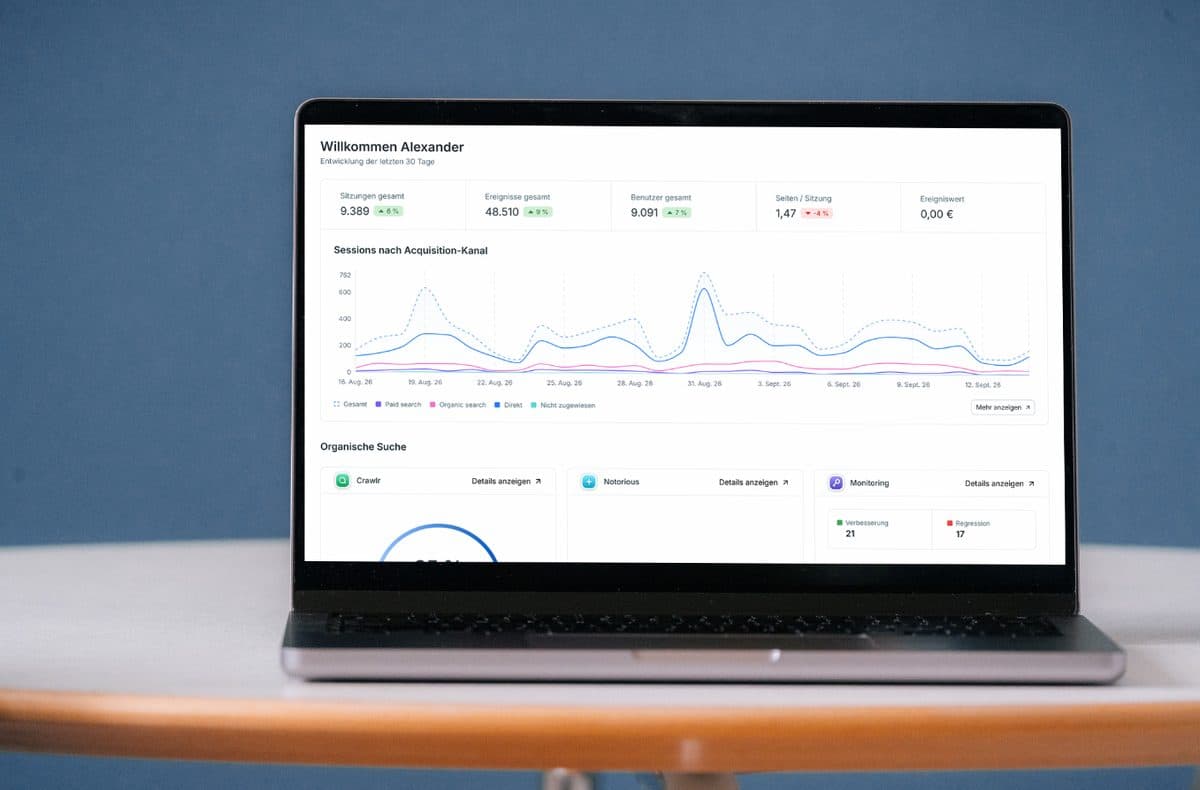
From the group comes the LLM Ranking in the Eskimoz app, which tracks visibility in the AI Overviews alongside the other systems, reported as a surface of its own and separate from the assistants. Because AI Overviews are rolled out to different degrees and appear with different frequency in each market, experience across 5 countries and 10 languages helps with interpretation. At the European Search Awards 2026 the group was named Best Large Integrated Search Agency, and the jury explicitly cited its early GEO focus.
FAQ
Frequently asked questions about SGE and AI Overviews.
The questions we are asked most often about SGE and AI Overviews in a first conversation.
What is the difference between SGE and AI Overviews?
SGE was Google's experiment with generative search; AI Overviews are the broadly rolled out AI answer modules that grew out of it. SGE no longer exists as a product; optimisation targets the AI Overviews.
How do I get into the AI Overviews?
You get into the AI Overviews through content that answers concrete questions precisely, is clearly structured, carries structured data markup and radiates authority.
Do AI Overviews cost traffic?
The AI Overviews can change click behaviour, because answers appear directly in search. That makes it all the more important to be visible as a cited source and to build brand presence.
Is a citation in AI Overviews the same as a mention in ChatGPT?
No. AI Overviews are the answer box in Google search, while ChatGPT and Perplexity are separate systems with their own source selection. Mentions there are measured by AI mentions tracking.
Is a good position enough to be cited?
No. The AI Overviews regularly cite pages that are not in the top positions when a passage there answers the question more directly. Position and citation are two separate goals.
Which queries trigger AI Overviews at all?
AI Overviews appear mostly for information-led and explanation-heavy questions. For clear navigational or purchase intent AI Overviews appear less often. Which of your topics are affected is shown by the audit.
Can I stop my content appearing in AI Overviews?
Technically the use can be restricted, but it is rarely sensible. Being excluded loses you visibility inside the AI Overviews without stopping the answer, which is then built from other sources.
What role does structured data play?
Structured data helps Google classify content for the AI Overviews with confidence, but it is not a switch. What matters more is that the visible text answers a question completely and extractably. The markup supports that; it does not replace it.
How do I measure my visibility in AI Overviews?
Visibility in the AI Overviews is measured through a fixed question set checked regularly for whether a module appears and whether your page is cited in it. Both are reported separately, because a module can appear without you.
Do I have to write new content for this?
For the AI Overviews, usually not. As a rule it is enough to add definition paragraphs, clear answer blocks and evidence to existing pages. New content is written only where nothing usable exists for the AI Overviews to pick up.
How quickly does the optimization take effect?
Optimising for AI Overviews works faster than for systems with strong model knowledge, because Google re-evaluates current content continuously. Realistically, first changes appear over a few weeks to a few months.
What does optimising for AI Overviews cost?
The effort for the AI Overviews depends on how many topics are affected and how good the existing content is. After the free analysis you receive a prioritised roadmap with transparent effort rather than a flat rate.
Free and without obligation
Let's talk about your visibility in the AI Overviews.
Personal, concrete and without off-the-shelf solutions. In a first conversation we show you which of your topics trigger AI Overviews and who is cited there today.