Search engine marketing
Search engine marketing: SEO, SEA and GEO in one place.
So your brand becomes visible where customers really search: in the organic results, in the ads above them, and in the answers AI systems now deliver. Personally committed, measurably effective.
SEO and SEA as a winning combination
Organic rankings and paid ads reinforce each other instead of competing.
Visibility in AI answers
Your brand also gets named where ChatGPT and others give the answer.
One named contact
One person knows your project, instead of three teams with three reports.
The basics
Definition and meaning of search engine marketing.
You want to be visible on Google at last, but you are not sure whether search engine optimization or advertising is the better bet? The good news: you do not have to choose. Together they form a strategy that builds your reach step by step instead of leaving it to chance.
Search engine marketing, or SEM for short, covers everything that helps your website get found in Google and other engines. It consists of two classic areas: SEO for organic results and SEA for paid ads. SEO keeps your content visible over the long run. SEA lets you be present immediately when people search for your products or services. The two complement each other, because while SEO builds trust and brings visitors over time, SEA can push specific campaigns, for instance during promotions or product launches. This interplay is what makes SEM so effective: it combines relevance with speed and puts you where people actually search.
Since AI systems started serving answers directly, a third pillar has been added: visibility inside those answers. This is why we understand search engine marketing in 2026 as the umbrella over SEO, SEA and GEO. Looking only at rankings misses the share of demand that is answered before anyone clicks at all.
At Semtrix GmbH we support you from the first analysis through to ongoing optimization, with a real understanding of how people search online rather than only of how algorithms calculate. Every measure comes with a number it is judged by.
Search engine marketing (SEM) bundles every measure for visibility in search systems: SEO for organic results, SEA for paid ads and GEO for mentions in AI answers. The goal is not visibility itself, but qualified enquiries.
Key figures
Search engine marketing backed by evidence.
The third pillar
GEO: AI visibility in search engine marketing.
People increasingly put their questions to ChatGPT, Perplexity and Gemini and get a finished answer, often without a list of results and without an ad. Whoever is missing from that answer is out of the running at that moment, however good the rankings are.
GEO is therefore not a sub-category of SEO or SEA but a discipline of its own, with its own rules and its own metrics. Semtrix measures this AI visibility with LLM Ranking in the Eskimoz app and plans it together with the other two pillars. What the work looks like in practice is covered under GEO optimization, while ongoing support is bundled by the GEO agency.
SEO and SEA
GEO / AI visibility

Most companies ask us whether they should do SEO or SEA. The more honest question is which channel covers which part of the demand at the lowest cost. That is not settled by opinion, it is settled by the numbers from the first quarter.
Why Semtrix
Why choose Semtrix for search engine marketing?
Semtrix was founded in 2015 and has delivered more than 1,500 client projects since, rated 5.0 on ProvenExpert across 132 reviews and 4.8 on Google. As a Google Partner and part of the Eskimoz group, named Best Large Integrated Search Agency at the European Search Awards 2026, we cover organic search, paid search and AI visibility with the same people who also do the implementation.
For you that means one roadmap instead of three, one report instead of three, and one named contact instead of questions about who is responsible. Where SEO and SEA get in each other's way, brand queries being the classic case, we settle it with data rather than channel interests. You can meet the team on the about us page and see examples in the references. How far organic work can go is shown by led-martin.de: since 2018 we have increased visibility there by 250% and visitor numbers by 40%, with 226 keywords in the top 3.
In comparison
Advantages of search engine marketing over traditional advertising.
Traditional advertising often reaches a lot of people, but rarely the right ones. Ads in magazines or on billboards speak to broad audiences, yet hardly anyone is actively looking for a specific product at that moment. Search engine marketing starts exactly here.
Advertising only where there is active interest
Your message appears once someone has expressed a need. That makes advertising more relevant and cuts wasted reach considerably.
Measured rather than estimated
Clicks, enquiries and sales can be followed live. You see what works immediately instead of relying on reach estimates.
Flexible rather than booked in advance
Where traditional campaigns fade after a few weeks, SEM stays movable: adjust content, shift budgets, swap keywords, at any time and with a visible effect.
Planning and budget
Search engine marketing: campaign planning and budget allocation.
Good search engine marketing runs on planning, not on chance. Two questions come first: how much do you want to invest, and how quickly do you want to see results? In the early phase a larger share of the budget usually goes into SEA, to gather data quickly and measure the effect. Over time the focus shifts towards SEO, because organic visibility stabilises and causes fewer running costs. In parallel we check where ads genuinely pay off and where organic results are enough on their own.
Building blocks
Integrating SEO and ads for maximum visibility.
Search engines are not an either-or. Staying visible takes both: SEO for a natural presence and SEA for targeted attention. Combined, they create a cycle that strengthens itself. Your ads deliver fast data on click behaviour and search terms, those findings feed into your content, and your organic reach grows step by step.
SEO optimization
More visibility for your website in web search, through technology, content and authority. If you are looking for the team behind it, that is the SEO agency.
SEA optimization
Efficient, performance-driven ads in Google Ads and Microsoft Advertising, including Google Ads optimization and ongoing support through the SEA agency.
GEO optimization
Optimization for mentions in ChatGPT, AI Overviews and others, guided strategically by the GEO agency.
Link marketing
Better rankings through high-quality backlinks and references, which at the same time build the authority AI systems look for.
SEO relaunch
A technical restart for your online growth, with a redirect plan and monitoring so rankings and campaigns survive the move.
Conversion optimization
In return, good work on the landing page turns expensively bought clicks into actual enquiries. One approach therefore covers two directions: lasting visibility and immediate reach.
Reviewed by Alexander, Director Search & Webdesign. Last updated in September 2026.
Individual. Effective. Tailored.
We build search engine marketing strategies that fit your goals exactly and deliver measurable results. Together we put your website on course.
How it works
Long-term scaling strategies with search engine marketing.
Success in search engine marketing does not happen overnight, it comes from constant refinement. Once the first campaigns are live, the real work starts. Here is how we work together, in five steps.
Diagnosis
An analysis of technology, content, rankings, ad account, competitors and AI visibility, including the question of which demand is currently being bought at what price.
Decision
A 90-day roadmap with clear priorities and a budget split across SEO, SEA and GEO that matches your goals.
Delivery
Expanding content, fixing technical issues, rebuilding campaigns, setting up clean tracking and sharpening landing pages.
Scaling
What works gets expanded: new topic clusters, further campaign types, additional markets. Recurring tasks are automated so there is time for strategy.
Monitoring
Ongoing control of rankings, ad performance, mentions in AI answers and conversions, with reports and status calls.
Measuring success
Measuring success with meaningful KPIs.
Search engine marketing is not guesswork. If you invest time and budget, you want to know what comes out of it. What matters is not collecting as many numbers as possible but reading them correctly: a high click-through rate helps little if people bounce from the landing page. In that case the keyword is not the problem, the structure, the offer or the messaging is.
Metrics for organic visibility
In SEO you look at things such as:
- the visibility of your website in the search results
- the click-through rate on organic listings
- the development of your rankings over several weeks
- enquiries or sales that come from unpaid visits
Only to a degree. It mixes brand and topic queries and hides movement. More telling is how top-3 placements for your key terms develop and what enquiries come out of them.
Why do rankings rise while enquiries stay flat?Often the pages ranking are informational ones that were never meant to trigger an enquiry. Either the link to a commercial page is missing, or the search intent does not match your offer.
Metrics for paid search
In SEA these matter most:
- the click-through rate (CTR) and the cost per click (CPC)
- the conversion rate, meaning how many clicks become customers
- the cost per conversion in relation to order value
- the return on ad spend (ROAS), which shows how efficiently your budget works
The one closest to the business. For shops that is usually ROAS or contribution margin, for service companies the cost per qualified enquiry. CTR and CPC are intermediate figures, not goals.
How do I spot wasted budget?In the search terms report. Queries with clicks but no conversions over a longer period are the first candidates for exclusion lists. There is more detail on the page about SEA optimization.
Metrics for AI visibility
AI answers have no position, only a mention or its absence, so measurement works differently:
- the share of questions where your brand is named
- the number of systems you appear in, from ChatGPT to AI Overviews
- the sources cited in your place
- the tone of the mentions, not only how frequent they are
Only if the same questions are asked every time. That is why we work with a fixed prompt set and measure on a schedule, rather than checking now and then.
Does GEO drive traffic?Partly. Some systems link their sources, others do not. The bigger effect is the mention itself: it works like a recommendation long before anyone opens your website.
Signals beyond click counts
Many successful campaigns also rely on softer measures. They say a lot about how relevant and convincing your content really is:
- time on page and scroll depth on the pages that matter
- returning visitors and direct traffic
- shared content, mentions and brand queries
- the quality of enquiries, judged by sales rather than by a tool
Only without context. Alongside hard numbers they show whether growth comes from genuine interest. Rising brand queries, for example, are a good early indicator that shows months before revenue does.
How does the sales assessment get back into marketing?Through feedback on each enquiry, ideally straight in the CRM. Without that loop, campaigns optimise for volume instead of quality.
Connections instead of isolated values
The interplay between the numbers matters as much as the numbers themselves. SEO and SEA influence each other: what performs well in ads belongs in the organic plan. Strong organic content in turn shows where paid campaigns can be scaled back without losing traffic.
- conversion paths instead of a last-click view
- brand and topic queries assessed separately
- the delay in organic impact factored in
- cost and return per channel measured against the business result
You can test it by pausing ads on terms with a stable top-3 position and watching total enquiries. Usually part of the clicks disappears while another part moves to the organic listing.
Which tools do you measure with?Google Search Console, GA4 and Google Ads as the basis, plus the modules of the Eskimoz app, among them Monitoring for rankings and AI Overviews and LLM Ranking for AI visibility. With the right metrics you spot trends before they show up in revenue.
Your benefits
Build your digital visibility with system and a clear strategy.
Semtrix stands for well-founded advice, tailored solutions and lasting results, in Germany and beyond. We are happy to look at how best to position your company digitally in a first, no-obligation conversation.
Free analysis
From knowledge to visibility.
Semtrix puts SEO, SEA and GEO into practice every day, from the analysis through to ongoing optimization. Start with a free analysis of your website and find out which channel covers which part of your demand at the lowest cost.
Cross-channel
Cross-channel marketing with data intelligence.
Search engine marketing only shows its full effect once it becomes part of a bigger picture. SEO, SEA, content and social work together, because each measure strengthens the others. Once you understand which search terms bring people to your website, you can carry those findings into articles, ads and email campaigns.
Data from ads and organic search
Google Ads shows within days which keywords actually bring clicks and conversions. That information helps improve content and sharpen landing pages instead of waiting months for organic data. Search Console data in turn shows which topics already work without any budget behind them.
Content that works for several channels
A well-researched article serves organic search, supplies arguments for ad copy and becomes a citable source for AI systems at the same time. What makes the difference is the preparation: clear definitions, sourced figures, named accountability.
Creating demand before the search happens
Not all demand exists yet. Social and display campaigns create attention for topics people will search for later. Success shows less in the click than in rising brand and direct enquiries.
From the click to the deal
CRM systems and analytics tools reveal which topics attract many potential customers and how user behaviour shifts across channels. The result is a combination of knowledge, technology and experience that strengthens your online visibility and makes marketing accountable again.
Team
Here for you in person.
Behind every successful search engine marketing programme there is a team of specialists working on your online presence every day, organic and paid alike.




Semtrix by Eskimoz
What the Eskimoz group means for your search engine marketing.
Semtrix is a global search agency: you get found wherever people search, organically, through ads and in AI answers. Semtrix has been part of the European Eskimoz group since 2024. That changes nothing about your day-to-day support, as your project stays with a fixed team in Düsseldorf or Essen.
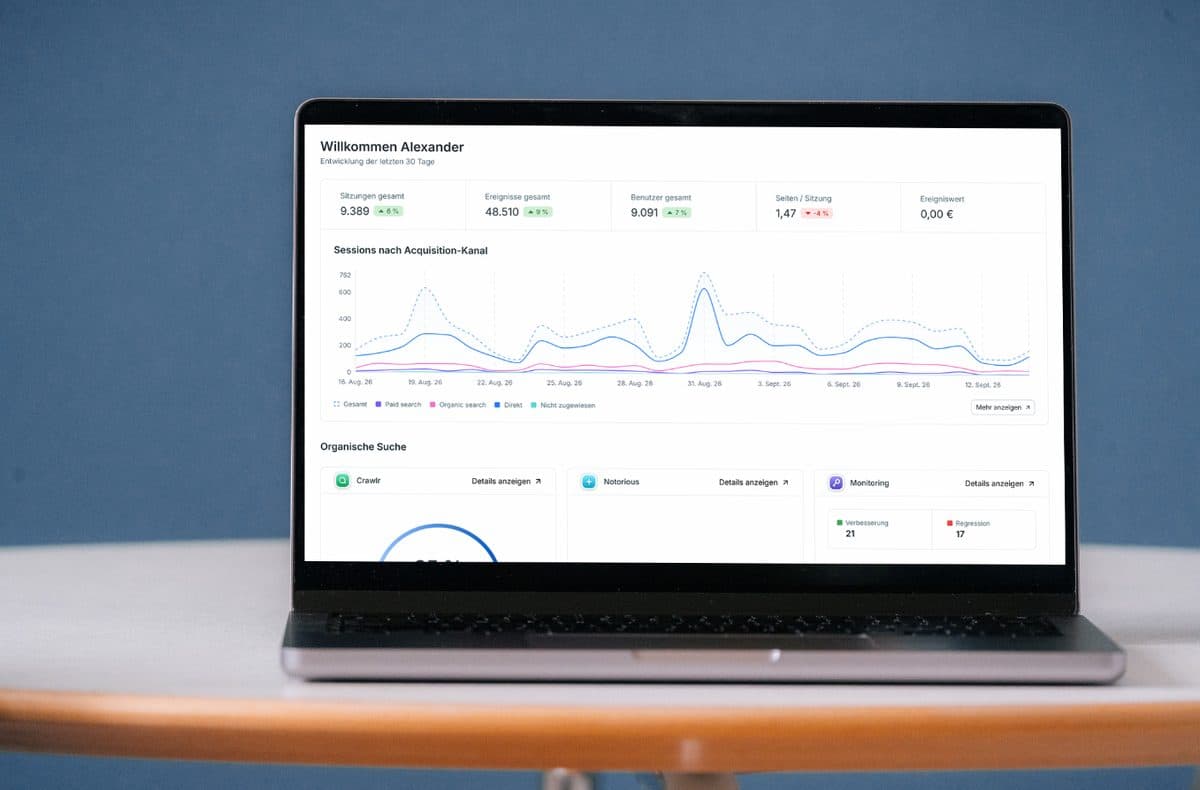
The group brings tools a single agency rarely builds: CrawlR for technical analysis, Monitoring for rankings and AI Overviews, Notorious for backlink comparison, Shoppiz for the product feed and LLM Ranking for AI visibility. At the European Search Awards 2026 the group was named Best Large Integrated Search Agency.
FAQ
FAQs about search engine marketing.
The questions we are asked most often about search engine marketing in a first conversation.
What is search engine marketing?
Search engine marketing covers every measure that makes your website more visible in search engines such as Google. It combines search engine optimization (SEO) and search advertising (SEA). SEO produces organic placements in the results, SEA produces paid ads on platforms such as Google Ads. At Semtrix, GEO for visibility in AI answers is added to that.
What is the difference between SEO and SEA?
SEO stands for search engine optimization and covers everything that improves your position in the organic results. It takes time but lasts. SEA means search engine advertising, in other words paid ads on platforms such as Google Ads. It makes you visible quickly, but you pay per click. Ideally you use both: SEO for sustainable traffic, SEA for immediate reach.
How does search engine marketing work?
Search engine marketing starts with a clear analysis: which keywords does your audience use, and how do they search for your products or services? Content and ads are then built to match those queries exactly. SEO improves your website over the long run, while SEA delivers immediate visibility.
How quickly does search engine marketing work?
You can see first results from SEA campaigns within a few days. With SEO it takes longer for stable rankings and sustainable traffic to build. The advantage: once both areas work together, your visibility grows noticeably faster, because you can see which topics perform.
How should I split my budget between SEO and SEA?
That depends on your goals. At the start it makes sense to invest a larger share in SEA, to gather data quickly and find out which search terms work. In the long run the focus is better placed on search engine optimization, because it creates organic reach without ongoing click costs. A common ratio is around 60% SEO and 40% SEA, though it can differ considerably by industry.
Which metrics matter in search engine marketing?
The important ones are visibility, click-through rate (CTR), average position in the results and conversion rate, meaning how many visitors actually take action. Time on page and returning visitors also show whether your content is relevant. These values help you adjust your strategy deliberately.
How do I find the right keywords?
Start with thorough keyword research: which terms do your customers really use? Tools such as Google Keyword Planner, SISTRIX or Semrush show search volume and competitiveness. Search intent is what counts: informational when people want to learn, commercial when they compare, transactional when they want to act or buy.
How do I measure the success of my activity?
Measurement is one of the great strengths of search engine marketing. With Google Search Console, GA4 and Google Ads you can follow every campaign from impressions through clicks to conversions. That shows which campaigns run well, which keywords pay off and how your positions develop.
What does Semtrix offer in search engine marketing?
We move you forward as a whole: strong SEO, high-performing SEA, AI visibility through GEO, effective link marketing and professional web design. Everything fits together, for more visibility, more qualified clicks and measurably more revenue.
What does search engine marketing cost?
Management fees depend on your starting point, the competition and your goals, while the media budget for ads is paid directly to Google or Microsoft. After the free analysis you receive a prioritised roadmap with transparent effort rather than a flat rate.
Is search engine marketing worth it on a small budget?
Yes, as long as the focus stays narrow. With smaller budgets we concentrate on a few purchase-ready search terms, one convincing landing page and clean tracking. Broad campaigns without focus burn small budgets faster than they produce data.
Do I need GEO in addition to SEO and SEA?
As soon as your audience uses AI systems for research, yes. Rankings and ads only come into play once someone opens a search. In an AI answer the shortlist is drawn up before that. How it is measured is explained on the page about GEO optimization.
Who looks after my project at Semtrix?
One named contact, supported by specialists for SEO, paid media and GEO. This page is reviewed by Alexander, Director Search & Webdesign.
Free and without obligation
Start your SEM project now.
Online visibility does not happen by accident, it is the result of a clear direction, continuous work and honest analysis. Whether it is your first campaign or a full overhaul, every project begins with an honest conversation and ends with results you can measure.